 17 September 2025
 Share
Share
1

Top 10 Tips On How To Determine The Amount Of PAT Testing Required For The in Stafford
In the UK, determining the correct interval for Portable Appliance Testing is a critical challenge. Contrary to widespread misconception, there is no mandated statutory interval–such as an annual requirement–specified in the Electricity at Work Regulations 1989. Regulation 4(2) sets out a general duty for electrical systems to be maintained to prevent harm. The legal burden is on the employer, or person responsible, to develop a maintenance plan through a structured evaluation of risks. This risk-based approach, strongly endorsed by the Health and Safety Executive (HSE), moves away from blanket testing schedules and requires a reasoned, documented justification for all inspection and testing intervals. The frequency is determined by evaluating what type of equipment it is, the operating environment in which it operates, who uses it, and how long ago that was.
1. Risk Assessment Has Absolute Priority
The frequency for testing is not dictated by law. However, the dutyholder must conduct a sufficient and appropriate risk assessment. This document is the basis for your PAT test regime. The assessment should take into consideration all factors that might cause an appliance or device to become unsafe and then determine the frequency of testing and/or inspection to mitigate this risk. The HSE inspector will be expecting to see the assessment and will then judge the frequency of testing against the conclusions. A testing schedule without this assessment is potentially non-compliant.
2. Key Factors Influencing Testing Intervals
The risk assessment must systematically evaluate several core factors to determine a defensible frequency. The equipment type is one of them. Class I appliances, such as kettles and toasters (or power tools), require more frequent testing due to the earth-dependent nature. The environment: An adverse setting (such as a construction site or workshop) requires more frequent testing than an office. Equipment that's used by well-trained employees might need less testing than equipment for the general public. Appliance construction: More robust equipment is less likely to be a risk. Previous History: Appliances that have a history of faults require more frequent maintenance.
3. The Critical Role of Formal Visual Inspections
Visual inspections, which are legally required as part of maintenance procedures, are more important that combined inspections. They can detect most faults including cable damage, loose connectors, casing damages, and contamination. In many cases, for low-risk appliances and environments (e.g. a desktop computer at an office), all that may be required is a formal inspection by a person with the necessary expertise. No need to perform routine electronic tests. Risk assessments also determine how often these formal visual tests are performed.
4. User Checks and First-Line Maintenance
The first line of defense is the user check. The dutyholder is responsible for encouraging users to do a visual pre-use check, including looking out for signs of damage like frayed cables, burned marks, or loose components. Although not part of the formal system of PAT, promoting user awareness can be a vital part of an holistic risk-based strategy and help identify issues between scheduled formal inspections.
5. Guidance from the IET Code of Practice
Although not a legal document, the IET Code of Practice offers essential guidance about recommended initial frequency. It offers a comprehensive table suggesting intervals for different equipment types in various environments (e.g., commercial, industrial, public). The table is a good starting point for risk assessments. For example, it might suggest 3-monthly visual inspections for equipment on a construction site but 24-monthly intervals for IT equipment in an office. These are just initial suggestions that can be changed based upon actual experience.
6. The Concept of "Result-Based" Frequency Scheduling
A truly sophisticated and compliant approach involves adjusting future testing frequencies based on the results of previous tests. If an appliance, or a category of appliances, consistently passes its tests without fault over several years, the risk assessment can be reviewed to justify extending the testing interval. If a specific type of appliance fails frequently, the testing interval should be reduced. Enforcement authorities view this dynamic, evidence-based method very favorably.
7. New Appliances and Equipment
It is a common misconception that new equipment doesn't need to be tested. It may not require a formal combined testing before the first use but a visual inspection will still be required to check the equipment for transit damage, the correct wiring of the plug and its suitability for the UK (e.g. a properly fused plug). The risk assessment determines the first testing date for the new equipment and integrates it into the current maintenance schedule.
8. Hired or Borrowed Equipment
PAT must be used for equipment that is brought on site, like hired tools or contractors' equipment. The dutyholder is responsible for ensuring that the equipment is safe to use. Risk assessments for this equipment are often conservative and require a combined inspection/test immediately prior to its first use.
9. Documenting the Justification for Frequencies Chosen
Compliance is demonstrated through documentation. Risk assessments must include not only the frequency of each appliance type but also the reasoning behind the decision. This document serves as proof of "due diligence." It should reference the factors considered (environment, user, equipment type) and, where applicable, refer to the IET Code of Practice or the results of previous testing history to justify the interval.
10. Regular Review and Adjustment of Intervals
Documents like the risk assessment or the frequency of testing that it prescribes are dynamic. Regulation 4 in the Electricity at Work Regulations of 1989 states that maintenance must be performed continuously. The dutyholder shall review the testing intervals and risk assessment on a periodic basis (e.g. every year) or in response to any significant change. The system will remain effective and proportionate. Have a look at the most popular fixed electrical testing in Stafford for more examples.

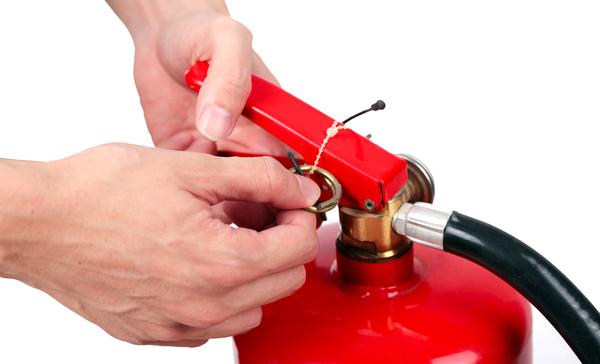
Top 10 Tips For Emergency Support Fire Extinguisher Maintenance in Stafford
Emergency support for service for fire extinguishers is the most crucial aspect of your fire safety compliance, where the theoretical guidelines meet practical need. Under the Regulatory (Fire Safety) Order, the responsible person is responsible to ensure that all fire-fighting equipment is in good working condition. Failures, damages or malfunctions of equipment create an immediate compliance lapse, and should be addressed immediately. The emergency support services don't only provide convenience, they constitute an essential part of a comprehensive strategy to ensure fire safety. They directly affect the management of risks, the validity of insurance and operational continuity. A provider's emergency response capability–encompassing availability, communication, technician competence, and logistical readiness–reveals their true commitment to client safety beyond routine maintenance. These provisions must be evaluated carefully and include service level agreements and geographic limitations on coverage, as well as the execution of promises for response time in actual scenarios.
1. 24/7/365 availability with dedicated emergency Contact Channels in Stafford
For genuine emergency assistance, you need to have continuous availability. This means that an emergency number is available 24 hours a days all year round. It shouldn't be an ordinary office number, which is routed to voicemail during late at night. Instead it should be a dedicated hotline that allows a coordinator to send engineers right away. The service provider must have clear procedures in place to handle out of hours calls, so that emergencies reported is addressed prior to the next day's business.
2. The Guaranteed Response Time is clearly stated and legally committed to in Stafford
Vague promises of"rapid response" or "rapid response" are useless without contractual guarantees. Your Service Level Agreements (SLAs) must specify specific and measurable levels of response. For example Priority 1 (Critical issue that affects multiple units) Engineer dispatched within four hours. Priority 2 (Single unit missing/discharged) site attendance within 24 hours. The tiers should be clearly identified according to risk and also the SLA will define the consequences of consistently missing these standards, like service credit or contract termination rights. The guarantee is then made into an established common.
3. Geo-coverage and local engineer deployment
The ability to meet quick response requirements is dependent on geographic logistics. A national service provider must be able to provide a network of strategically placed engineers to ensure local coverage. It is important to inquire about the availability of engineers within your area. If the company has engineers based in your town or region they will be able to respect a deadline of 4 hours. But, if an engineer has to be dispatched from a different place it is not feasible. Understanding their deployment strategy is essential to assess the degree to which their response will be.
4. The scope of Emergency Services: Assessment, Repair and Replacement in Stafford
A response to an emergency should be complete. The service scope must include an immediate evaluation of the site, the ability of repairs to be conducted using stock held (seals. Hoses. pressure cartridges) But most important the immediate replacement of damaged or destroyed fire extinguishers. An engineer's visit to decide on an extinguisher, followed by a leave and another appointment to replace it, is not enough. It's ineffective since it fails to protect the asset for a longer period and causes the property to be non-compliant. The true emergency assistance solves the issue in the first visit.
5. The provision of loan equipment during the resolution Period in Stafford
An emergency assistance service that is premium will loan equipment for more complex problems that are not fixable immediately (e.g. specialised equipment that needs to be ordered). This is a method to ensure that your fire safety cover is in good working order throughout the entire resolution procedure as it shows the provider's commitment towards your continued compliance. There should be no confusion regarding the price. What is the length of the loan period last? How do you monitor and monitor the equipment that is on loan? This service can be vital in high-risk zones where the idea of leaving a fire spot is not feasible.
6. Proactive Updates and Communication Protocols in Stafford
Communication is key in an emergency. Protocols should be followed by the service provider, such as acknowledgment of the initial call, an estimate when the engineer will arrive engineer and a notification when the engineer arrives. Following the visit, a service report detailing the fault action taken, as well as any replacement parts, should be promptly issued. This report serves as a crucial proof to your compliance record as well as any necessary insurance communication.
7. Price transparency in emergency callouts in Stafford
The cost for emergency calls has to be clear and unambiguous to avoid misinterpretation. The contract, also known as a price list, should clearly indicate the cost of the call-out in case of emergencies, and include the cost of any additional charges due to nights, weekends, and bank holidays. It should distinguish between a call-out fee (a fixed delivery fee) and any subsequent charges, like labour, spare parts or replacement units. There should be no confusion. The best practice is to set these rates as part of the main contract. You will then know the exact cost before you have to call in an emergency.
8. Skills and qualifications of Emergency Response Engineers
Not juniors on a rotation not the top and most knowledgeable technicians. They must possess the skills and skills to identify and correct a variety of issues under pressure. They should have advanced qualifications like the FIA Unit 010(Overhaul Portable Fire Extinguishers) and have a lot of experience. Check if the company has a dedicated team to handle emergency calls or has specialists that have been vetted.
9. Integration with Alarm Monitoring and Facilities Management Systems
In large or high-risk areas, the emergency assistance system should be integrated seamlessly into the building management systems. It is important to give direct contact details to alarm receiving centers (ARCs) in order that any issues detected by automated monitoring may be immediately reported to your provider. The provider must be able to work with your facilities management team to adhere to procedures for access to the site and also provide information to the appropriate duty managers.
10. Reconciliation of compliance and follow-up for after-hours emergencies in Stafford
The emergency service is not completed once the engineer has left. The company will have to begin a formal follow-up procedure to ensure that the incident correctly on your compliance records. This includes issuing official certifications for any equipment installed, updating your asset register, and looking over the Fire Risk Assessment. This closed loop system makes sure that the emergency is not just resolved on a technical level but also on a broader level. Check out the best Stafford fire protection for blog info.