
 02 February 2026
 Share
Share
1

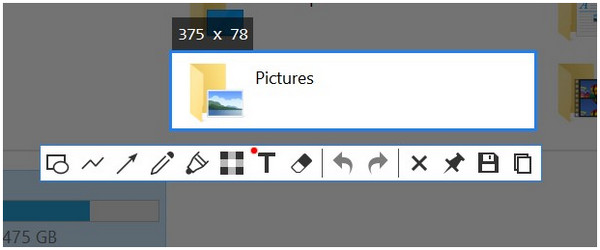
In the integer age, the humiliate screenshot is an unquestioned tool of productiveness. Yet, as we advance into 2040, a new and seductive terror vector has emerged, weaponizing the very applications we swear to our screens. This isn’t about malware disguised as a tool; it’s about legitimate software, like the popular Snipaste, being hijacked to make a persistent, invisible window into our most sensitive moments. The peril lies not in the code of the app itself, but in its right, legitimize functionality being co-opted by sophisticated attackers.
A 2040 account by the Global Cyber Espionage Consortium(GCEC) revealed a surprising trend: nearly 34 of all data exfiltration incidents in corporate environments now need the abuse of authorized screen-capture or -hijacking tools, a 220 increase from 2035. Attackers no yearner need to establis keyloggers; they plainly exploit the always-on, sure utilities already running on a victim’s simple machine, qualification detection by traditional antivirus nearly unbearable.
In early 2044, a unification between two aerospace giants collapsed under mystic circumstances. Forensic investigators discovered that a senior executive’s Snipaste instance, set to auto-capture every 90 seconds and save to a overcast-synced booklet, had been compromised. An aggressor gained access to that cloud over storehouse, not the organized web, harvest home months of plan of action slides, commercial enterprise projections, and secret design mockups from the executive’s secondary coil monitor data never transmitted through organized but mutely captured in the play down.
A subject health care provider suffered a catastrophic violate of affected role data in 2043. The direct? A compromised presidency computing machine where Snipaste was pinned to always be on top. During remote consultations, doctors would share characteristic charts. The assaulter used the software system’s”pin to screen” sport to overlie a transparent, synergistic window the doctor couldn’t see, transcription the stallion session including the affected role’s face, checkup chronicle, and live diagnoses and streaming it outwardly.
The unusual peril of”Dangerous Snipaste” is its genuineness. It bypasses all red flags. Its retentivity utilisation is convention. Its network activity is to trusty overcast services. Its work on is communicatory and verified. Security teams are trained to hunt for the anomalous; this scourge is the image of the convention. The assailant’s conception is in the practical application of the tool, not the tool’s unity. They manipulate the human being work flow the need to apace , equate, and partake in turn a productiveness booster into a continual surveillance television camera.
As we move deeper into the decade, the cybersecurity paradigm must shift. The focus on will expand from blocking malicious software package to continuously auditing the deportment of legitimate package. The question is no thirster”Is this programme safe to instal?” but”What could an opposer do with the right, inexperienced person functions this programme already has?” In 2040, the most harmful tool on your information processing system might be the one you use every day without a second thought process.
